If you are asked to pick a genre you most associate with Steven Spielberg, you’d probably pick sci-fi. He is one of the ultimate masters of sci-fi and is responsible for quite a lot of the most familiar visual language that we associate with sci-fi, especially heart-driven, Amblin-like releases that appeal to a very broad audience.
But over the span of his decades-long career, Spielberg has actually made movies in a lot of different genres. He’s just as well-versed in bringing comedies to the screen as he is in historical biopics. And really, the thing that unites most of his work is telling stories that make audiences feel, no matter what the emotion. He’s broken-hearted. He’s captivated us with mysteries; he’s scared the living daylights out of all of us; and he’s approached everything with a sense of wonder that makes the stories he tells almost universally appealing. But sometimes, he also likes to really get under the skin of the audience.
Over the course of his career, Spielberg has made a number of thrillers. In all honesty, quite a lot of his high-concept genre movies could also be classed as thrillers if they weren’t primarily sci-fi. For instance, Jurassic Park uses lots of the same storytelling techniques as thrillers, but it is a full-blooded sci-fi. Minority Report, likewise. So neither counts in the conversation of the best.
What about the pure thrillers that don’t rely on higher concepts and are more focused on the simple desire to raise the audience’s blood pressure? Since the 1970s, Spielberg has made six, but which is the best of his pure thrillers?
6
Duel (1971)

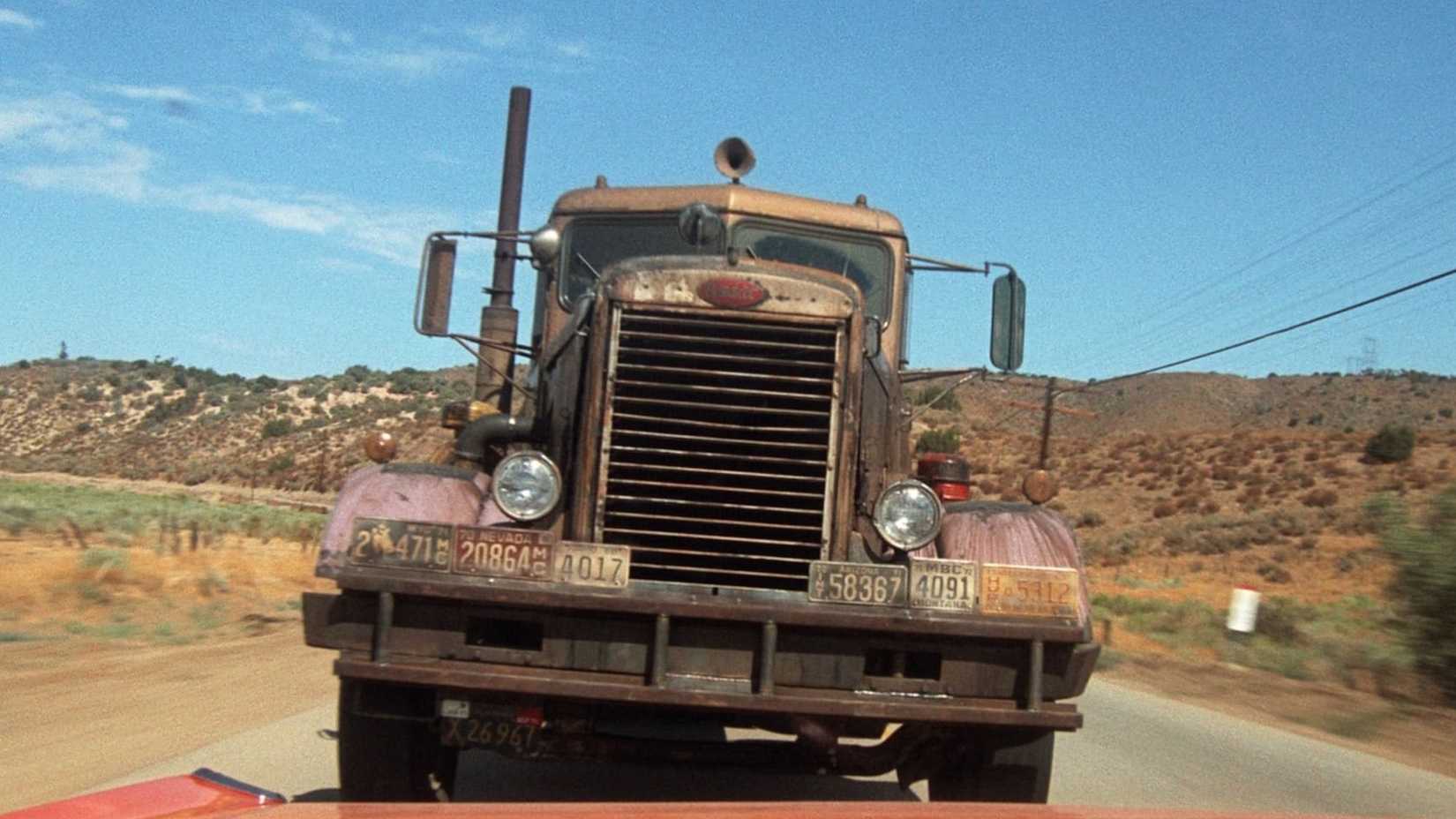
More than 50 years on from its release, Steven Spielberg’s first movie, Duel, offers fascinating insight into the great man’s early creative years. Made on a shoestring budget and not actually released to theaters, the ABC TV movie lacked blockbuster backing and had no access to the kind of star-studded casts that would define his later movies. It also had a pretty bare-bones premise of a traveling salesman hunted on a desert highway by an unseen truck driver, but it still works.
While it doesn’t feel like it was ever set up to achieve massive pop culture status, it’s still an important part of Spielberg’s journey to becoming a great thriller maker. And for genre fans, Duel offers good value, stripped-down suspense. Shot in just 13 days, the pace is pretty relentless, and the way Spielberg transforms a rusted 1955 Peterbilt tanker into a terrifying monster-like entity is still very impressive. This isn’t a horror or a monster movie, but, like Jaws, it hits a lot of the same notes, and it’s really difficult not to sympathize with Dennis Weaver’s frantic lead performance as an ordinary man pushed to his limit by incredibly relatable fear.
Duel doesn’t yet show the confidence or the gloss of later Spielberg movies, but even this early, he was making fast-paced movies that could make his target audience feel – in this case, white-knuckle dread – even with his hands tied by a necessarily minimalist approach.
5
The Post (2017)

The Post does not feature classic action scenes or cat-and-mouse villain chases, and instead, all of its tension is built like a ticking time bomb. Set in 1971, it tells the story of the Washington Post scrambling to publish the leaked Pentagon Papers while facing massive political pressure and legal threats from Nixon’s White House. It’s a smart approach to tackling one of the most infamous periods in modern American history.
Spielberg adds just enough urgent energy to avoid the rush of chaotic phone calls, legal debates, and publishing bureaucracy becoming boring, and impressively manages to build tension despite everyone knowing the outcome of the story. It obviously also helps that, at the heart of the story, there are two incredible performances by Meryl Streep as publisher Katharine Graham and Tom Hanks as the relentlessly driven editor Ben Bradlee. It’s a bit of a cliché, but you come out absolutely understanding why they are two of the greatest working actors today.
4
Munich (2005)

Munich obviously sits within the bracket of Spielberg’s more political works and ignores the allure of easy heroic resolution for a deeply unsettling, slow-burn narrative. With an excellent performance by Eric Bana at its heart, the movie depicts the covert Israeli retaliation campaign that followed the 1972 Munich Olympics massacre and also carefully avoids standard action clichés.
Spielberg applied what he’d clearly learned from the likes of Jaws and Jurassic Park in constructing high-tension sequences to build a feeling of genuinely excruciating suspense. Banner’s lead performance is a masterclass in restraint and was unthinkably snubbed at the Oscars. He plays Avner Kaufman, who leads the clandestine unit that also features Daniel Craig and Ciaran Hinds, who offer typically strong support. They’re all framed by Janusz Kaminski’s beautifully muted palette that gives everything an almost muddy feel.
Munich is a morally complex and consciously provocative movie, which is something that Spielberg hasn’t shied away from in lots of his films. As Kaufman and his team check off their targets, the line between justice and vengeance blurs, and the audience is invited to pick at the psychological toll of eye-for-an-eye violence.
3
Catch Me If You Can (2002)

Almost 25 years on, Catch Me If You Can is still one of Spielberg’s most charming films, and it stands apart from his other thrillers because it trades high-stakes terror for a warmer, almost comedic charm. Without ever losing any of its suspense, instead of chase sequences or time bombs, Spielberg crafts one of the best cat-and-mouse games that’s centered on psychological warfare.
Between Leonardo DiCaprio’s real-life rascal Frank Abagnale Jr. and Tom Hanks’ dogged FBI agent Carl Hanratty. Though he was still very young at the time, DiCaprio moves effortlessly between Abagnale’s different identities. He is completely compelling, utterly charismatic, and convincingly two steps ahead of everybody else.
Spielberg basically made Catch Me If You Can a sleek marriage of a 1960s caper movie and a stylish thriller that revels in the chase. There are also the usual Spielbergian tropes hidden under the surface for added resonance: namely a fractured family dynamic and Frank’s desperate attempt to restore his father’s legacy. And it all works thanks to Spielberg’s commitment to lighthearted escapism that isn’t traditionally associated with the genre.
2
Bridge of Spies (2015)

The idea of a true story of the legal process to free two American political prisoners during the height of the Cold War by a suburban lawyer might not seem like a thriller in conventional terms. But that is precisely the subtle genius of Bridge of Spies, which is not only one of Spielberg’s more contemplative thrillers, but also a masterclass in slow-build suspense.
Tom Hanks plays James B Donovan, who finds himself unwittingly pushed to the hidden front line of the Cold War when he’s asked to defend Rudolf Abel, a Russian spy found embedded in America, who becomes a sort of poster boy for America’s tense war with Russia. Mark Rylance is excellent as the pragmatic spy who humanizes the other side and forces Donovan to confront the idea of sympathetic enemies.
Spielberg’s storytelling here is as precise as it’s ever been, and the escalation is almost achieved without the audience’s awareness, but by the time we get to the climactic prisoner exchange, you suddenly realize you’ve been holding your breath.
1
Jaws (1975)

Spielberg’s first masterpiece, Jaws is mostly misclassified as a horror movie. Yes, it is one of the definitive pillars of monster movie or animal attack movie history, but it is absolutely a thriller that just so happens to have shark attacks at the heart of it. Thanks in part to the serendipitous accident of a cursed production schedule, Spielberg made Jaws feel more like a serial killer or slasher movie, bringing procedural elements as well as a personal journey of discovery for Roy Scheider’s hero that made it one of the greatest thrillers ever made.
It is a genius achievement in restrained filmmaking, as Spielberg was forced to hide Bruce the shark off-screen. But even if he hadn’t, the idea of a killer shark stalking a seaside town that feels politically compelled to be complicit in the shark’s killing spree has all the makings of a great thriller story.
Interestingly, of course, while a lot of noir-influenced thrillers rely on darkness and the feeling of claustrophobia to sell the threat of whatever villain is in play, Jaws does the opposite: using the isolation of open sea and bright daylight to make everything feel even more disarmingly scary. It will never grow old and will always be one of Spielberg’s most watchable movies, and it’s easily his best thriller.